Tuesday, October 13, 2015

Last stop of the vacation - Budapest

A short 2.5 hours journey by a RailJet train brought us to Budapest. The first order of things was to buy a Budapest Card - after some research we had found that buying the card would make sense as it allows unlimited use of the public transport, free entrance to a lot of museums and significant discounts on variety of activities. Even though we we were in the city for 3 days, we bought a 2 day card instead as we had decided to keep the first day very light and had planned on exploring the sights near our hotel.
View from the hotel room


After we bought the cards, we located the bus stop and a short 15-minute ride later, we checked into our hotel. All the rooms at this hotel offer amazing views of the river Danube, Buda Castle & Chain Bridge and ours was no exception.

An exhibit en route 
While we were contemplating whether to step out again in the hot sun, the clouds gathered and it started raining heavily. The showers lasted for about 30 minutes and left the evening cool in its wake, making it a perfect weather for a walk.

We decided to see the 19th-century Chain Bridge that connects the hilly Buda district with flat Pest (we were on the Pest side). This suspension bridge is the first permanent bridge to connect the two districts.
Chain bridge


We walked along the river along with hundreds of tourists equally interested in enjoying the evening breeze. As we reached the bridge, the crowds only increased. The side walks of the bridge were crowded with tourists taking pictures, cyclists and pedestrians.  
As soon as we crossed the bridge we saw a big crowd lined up in front of the funicular that runs from bridge level to Buda Castle above. Since we had plans to visit the castle next day, we decided to continue walking towards Fisherman's Bastion - a viewing terrace, with many stairs and walking paths.

Last set of steps leading to the terrace


The walk to the Fisherman's Bastion was again uphill but once there the views more than made up for the hard work. Last steps leading to the Bastion were a monumental double stairway, decorated with reliefs of coats-of-arms and various motifs.


Panoramic View from the terrace


The Bastion takes its name from the guild of fishermen that was responsible for defending this stretch of the city walls in the Middle Ages and is made up of seven towers - each one symbolizing one of the seven Magyar tribes that, in 896, settled in the area now known as Hungary.


Cafe on the terrace


The present day lovely lookout towers / decorative fortification of Fisherman’s Bastion were built in the 19th century to serve as a lookout tower for the best panoramic views. There used to be real castle walls where now we can take fantastic photos from, but the present day structure has never served as an actual fortification in Buda.

While the access to balconies is free but to visit the top turrets/towers one has to pay a fee. The terrace also houses a cafe, a pretty expensive one though!


The Matthias Church


The towers, though fairy-tale like, seem to be in sync with the style of the Church of Our Lady (Matthias Church) and nicely complement the church, which was the intention of the architect. Matthias Church was built in 13th century along Trinity Square, in the heart of the Castle District,

Trinity Square with its Trinity Column (far back a bit to the right)


Between the Bastion and the Matthias Church, there is a bronze statue of Stephen I of Hungary mounted on a horse. The pedestal of the statute has episodes illustrating the King's life.


Old Town Hall


To the south of the Trinity Square is a white Baroque building that was the town hall of Buda till late 1873 when the municipalities of Buda, Óbuda and Pest merged to form Budapest. 
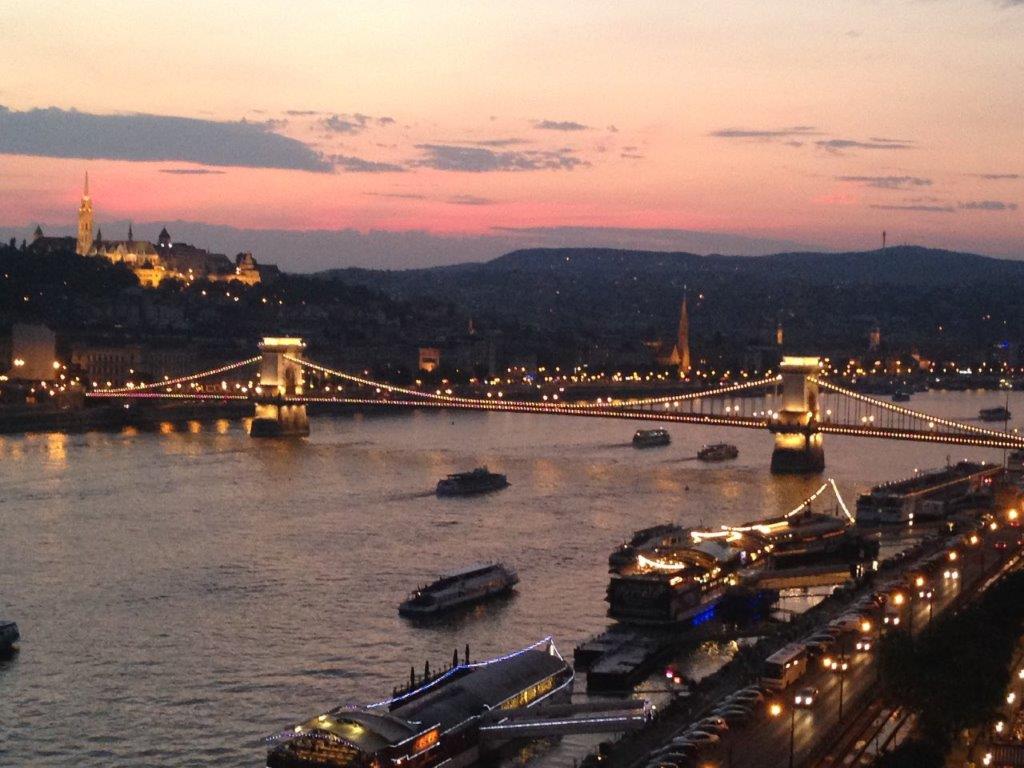


View of Chain Bridge and Bastion (far left) from the hotel


After spending couple of hours at the Bastion, we walked back to our hotel to find an impressive view of the bridge and bastion waiting to greet us. We raised our glasses to this view and to the promise of a perfect end to our vacation!


Monday, October 12, 2015

Vienna - Art History Museum and Imperial Treasury

The Kunsthistorisches Museum (KHM) was built in 1891 near the Imperial Palace to house the extensive collections of the imperial family. With its vast array of works and the largest Bruegel collection in the world, it is considered one of the most eminent museums in the world. The architectural mirror image of the KHM is the Museum of Natural History on the opposite side - we didn't visit that museum though.

Even before we get to the collection housed by this museum, it's important to note that the building was commissioned as a museum to begin with - very different from all major museums across the world that were usually palaces to begin with and were later converted to museums. 
The inside of the building is lavishly decorated with marble, stucco ornamentations, gold-leaf, and of course, paintings. Looks like no expenses were spared to find a suitable shelter for the Habsburgs' formidable art collection. 
Paintings gallery houses numerous major art works of European art history like Raphael’s "Madonna in the Meadow," Vermeer’s "The Allegory of Painting," the Infanta paintings by Velazquez and masterworks by Rubens, Rembrandt, Dürer, Titian and Tintoretto. 

Cafe inside the museum


The Egyptian and Near Eastern Collection contains fascinating treasures from mysterious cultures long past. The Kunstkammer Vienna (Chamber of art and wonders) displays precious artworks from the Middle Ages, the Renaissance and the Baroque era. 
As with any museum, no  matter how much time one spends, it is simply never enough, so after a few hours, we decided to head to the Imperial Treasury. It is located at the Hofburg palace and contains a valuable collection of secular and ecclesiastical treasures covering over a thousand years of European history. The entrance to the treasury is at the Schweizerhof (Swiss Courtyard), the oldest part of the palace. 

The Imperial Treasury is affiliated with the KHM and hence we could buy a combined ticket for the two of them. The treasury has 21 rooms that houses a  collection of rare treasures compiled by the Imperial House of Habsburg over the course of centuries. The notable treasures include the Imperial Crown, Orb, and Sceptre of Austria. It also has the Imperial Regalia of the Emperors and Kings of the Holy Roman Empire, including the Imperial Crown of the Holy Roman Empire.

The lighting inside the treasury is very controlled and flash photography is not allowed, so again I decided to skip the photography and focused on enjoying the lavish and historical displays instead. It took us little over an hour to finish the tour - to be honest one would need more time to look at all the treasures but we were tired so we wrapped it up much quicker. 

A day at Schonbrunn Palace, Vienna

First stop of the day 2 in Vienna was Schonbrunn Palace. Vienna has lots of nice palaces (Hofburg and Belvedere to name a few) but we didn't have time to visit all, so I chose the one that came most recommended. I again booked the tickets well in advance at www.schoenbrunn.at/en which was very useful as the ticket queue was fairly long when we reached the venue.

Palace Facade
Schönbrunn Palace, the former summer residence of the imperial family, is one of Europe's most impressive Baroque palace complexes. It has 1441 rooms and gardens extending for 1.2 km from east to west and 1 km from north to south. Both the palace and gardens were placed together on the UNESCO list of World Heritage Sites in 1996.

We had opted for the Grand Tour that in addition to the state rooms and private apartments of the imperial couple allows access to the precious 18th-century interiors from the time of Maria Theresia - all in all 40 rooms. The rooms, shown to the public, are mostly decorated in Rococo style. Most of the walls and ceilings are covered with white-lacquered surfaces with ornamentation covered with gold leaf.

Bohemian crystal chandeliers and white porcelain tile stoves are also part of the harmonious design. The living quarters and offices used by Emperor Francis Joseph are simple and very unpretentious; by contrast, the state rooms and guestrooms are much more lavish. And of course there is a Hall of Mirrors, where in 1772, six-year-old child prodigy Wolfgang Amadeus Mozart gave a concert. Photography is not permitted inside most of the rooms and so absorbed was in the beauty of it all, that I decided it's better to soak it in than click pictures.

By the time we were finished with the Grand Tour, it was almost noon and the sun was almost at its peak - honestly not the best time to the visit the one square km garden. But since the palace and its grounds form a unit and reflect each other, the visit would have been incomplete without visiting the gardens. 
Water ponds in the Garden


As expected the gardens are really beautiful. There are French Gardens called the Great Parterre which also contain a 630 m long maze in a classic hedge design. Adjoining this is the labyrinth, a playground with games, climbing equipment and a giant mirror kaleidoscope.


The Gardens also have a zoo, an Orangerie, palm house and a botanical garden. But we were more interested in exploring the Gloriette (a building in a garden erected on a site that is elevated with respect to the surroundings). The Gloriette at Schonbrunn is on a hill at a height of 200 ft and houses a café and an observation deck, which provides panoramic views of the city.

Sun Fountain


As we left the labyrinth for the Gloriette, first stop on our was was the original Schöner Brunnen fountain, from which the palace gained its name. It pours through the stone pitcher of a nymph near the Roman ruins.


View of palace as one moves towards Gloriette
Gloriette


Life saver on  that hot day!
It was quite a walk to the Gloriette as it was a very hot afternoon and uphill walk is never easy. But the cold beer at the Cafe turned out to be a perfect reward at the end of the walk. 

View of Palace & City from Gloriette


After spending a good part of the hour at the cafe, we stepped out to enjoy the view. The view from the Gloriette, looking back towards the palace with Vienna shimmering in the distance was simply amazing!
View of Gloriette back from the palace


After a while we slowly made our way back to the palace, trying to walk in shade wherever we could find some. I wanted to visit the Orangerie and the zoo but the sizzling temperatures were to tough to handle and we decided to skip the same and boarded the subway back to the city. 

Vienna

The train journey from Prague to Vienna was little over 4 hours and it was very comfortable. We had taken the precaution of reserving the seats by paying an additional charge of just 3 euros per head and it was worth it because this was peak tourist season and while the train was quite empty when we boarded it, soon all seats had filled up and there were a significant number of travelers left standing.

This RailJet train was also much better than the Eurocity that we had taken from Berlin to Prague. I had booked these tickets at www.oebb.at/en at very reasonable prices. 

Once we landed at Wien Hbf, it took us about 10 minutes to figure out the transport to our hotel. It was just couple of stops by train. At the hotel, I was a bit disappointed to not receive the upgrade but I really liked the big lounge they had in the opposite building. 

The weather was still hot, so we stayed in for a while and enjoyed the complementary wine before taking a train to Stephansplatz to see the St. Stephen's Cathedral - one of the most important Gothic structures in Austria. Just like Berlin, Vienna also has an extensive train/subway transport system. I was surprised to find that Google maps again was not a reliable option to find the best route between two points and hence I started using the downloaded version of the Vienna's transport map.

The moment we stepped out of the station, the Cathedral was just there...a magnificent building in the middle of a very busy square. There were throngs of couples and families enjoying the early evening breeze. There were horse carriages and street performers and lots of shopping avenues around the Cathedral, overall a very lively atmosphere. 
Notice the tiled roof


After spending some time inside the Cathedral, we circled around to look at this massive structure from all angles. Over the centuries, soot and other forms of air pollution accumulating on the church have given it a black colour but it is still beautiful. The glory of St. Stephen's Cathedral is its ornately patterned, richly coloured roof covered by thousands of glazed tiles. 
Capistran Chancel


There are also a lot of fixtures on the outside walls - one of them is the Capistran Chancel, the original cathedral's main pulpit inside. This statue shows St. Francis under an extravagant sunburst, trampling on a beaten Turk. 


It was late in the evening now and we were a bit hungry so we decided to visit Naschmarket. This 1.5 km long market has around 120 market stands and restaurants for a colorful culinary offering ranging from Viennese to Indian, from Vietnamese to Italian. Again we took the subway and were there in almost no time. It was a bit of walk from the station to the market but the weather had cooled down and we were enjoying this stroll.

We walked from one end of the market to the other, soaking in the ambiance of it all before we decided to sit down for a beer and a small meal. Almost everyone was hanging out on tables outside on the market road. The layout was such that there were eating joints on either side of the market road which was barely 30 ft wide - resulting in very limited space between the tables of the two opposing joints.

While we waited for our food, we enjoyed the antics of a dog on the other side. It seemed very bored with it's master's attempts at "impressing" the lady with him. At first the dog was sitting on the road, then it apparently got tired and lied down on the road...some time later it decided that it deserves a chair, so climbed on it and finally dozed off there!

Sated with the food and drinks, we resumed our walking tour of the market and when we were sure that we have seen it all, we boarded the subway back to our hotel.

Thursday, October 8, 2015

A day in the old town of Prague

I woke up fresh the next day. Guess the antibiotics had kicked in and sleeping early also helped the cause (though I missed the Act 2 of the opera!). But I was happy to be feeling almost like my old self again. Today was reserved for the Old Town. Again, the weather gods were being benevolent and temperature was more reasonable. The walk to the old town square was extremely pleasant. 

As we stepped  into this Square that had started as central marketplace for Prague in 12th century, it felt like a journey back in time. The Old Town Square (Staroměstské náměstí) is one of two main squares in Prague. With its ancient buildings and magnificent churches, this is one of the most beautiful historical sights in Europe. The most notable sights on the square are the Old Town Hall Tower & Astronomical Clock, Tyn Church and St. Nicholas Church.

Old Town Hall Tower
Tyn Church
Astronomical Clock
At the center of the Old Town Square is the Jan Hus statue, erected on the 6th July 1915 to mark the 500th anniversary of the reformer’s death.
Jan Hus Statue

After spending about an hour in the square we walked to the Jewish museum - basically six Jewish monuments clustered together: the Maisel Synagogue, the Pinkas Synagogue, the Spanish Synagogue, the Klaus Synagogue, the Ceremonial Hall and the Old Jewish Cemetery . There is also the Old-New Synagogue , which is still used for religious services, and requires a separate ticket or additional fee. We had bought combined ticket online that allowed us entry to all places except the Maisel Synagogue as that was closed. 

We started with the Old Jewish Cemetery. The numbers of grave stones and numbers of people buried here are uncertain, because there are layers of tombs. Jews must not destroy Jewish graves and in particular they are not allowed to remove the tombstone. This meant that when the cemetery ran out of space and purchasing extra land was impossible, more layers of soil were placed on the existing graves, the old tombstones taken out and placed upon the new layer of soil. This explains why the tombstones in the cemetery are placed so closely to each other. This resulted in the cemetery having 12 layers of graves. I didn't feel like clicking pictures, we just walked around the cemetery and came back out in like 15-20  minutes.

We exited the cemetery through a gate between the Klaus Synagogue and the Ceremonial Hall both of which house exhibitions on Jewish forms of worship, family ceremonies and traditions such as birth, circumcision, bar mitzvah and marriage. Since they were adjacent to the cemetry we were able to cover these in next 90 minutes or so. Last monument on our list that was a few minutes walk from this cluster was the Spanish Synagogue. And man was that a treat for the eyes! 

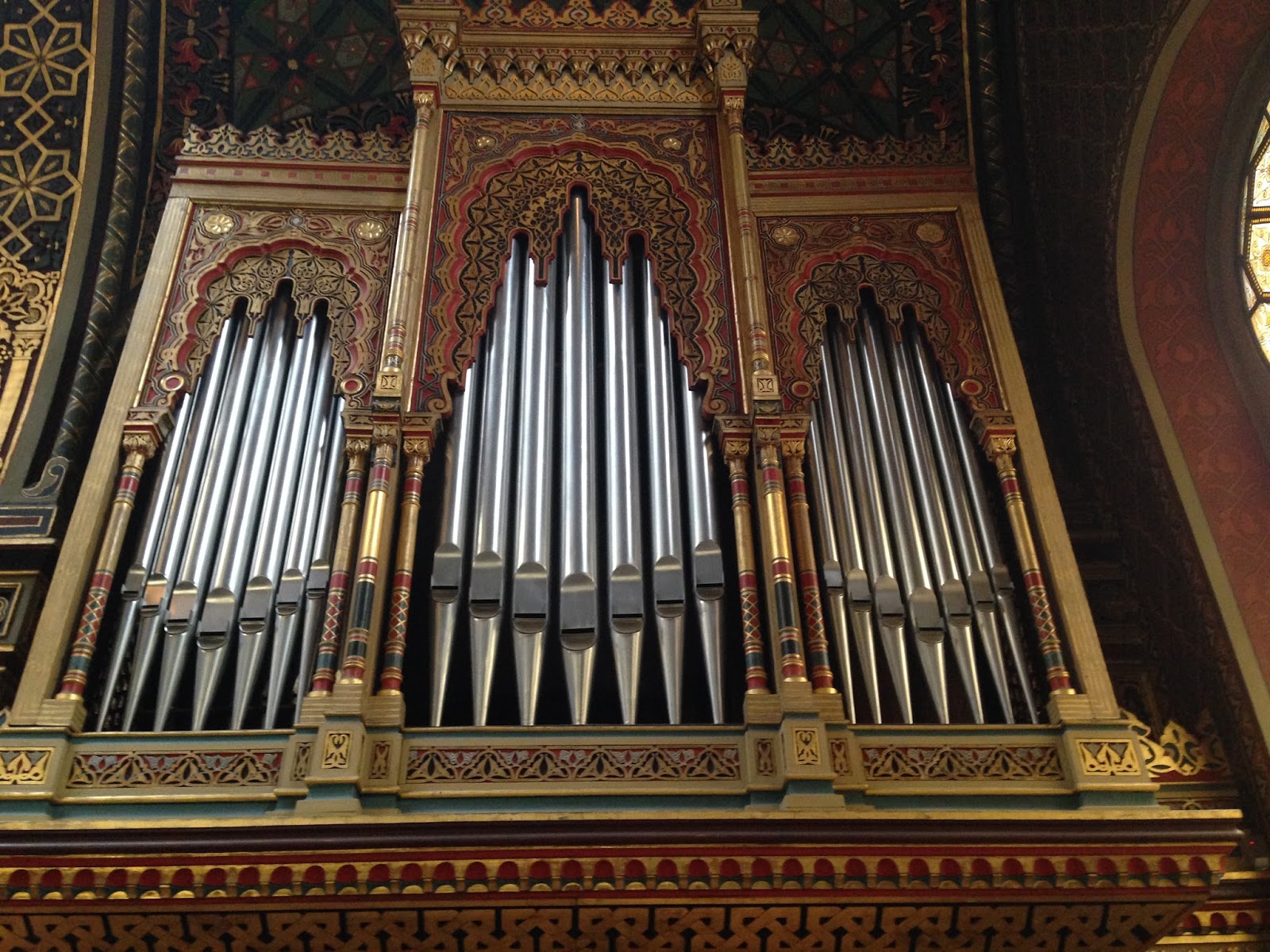
The name of this synagogue has nothing to do with its origins. The architectural style is heavily influenced by the Moorish palaces and mosques built in the southern coastal region of Spain. One could even say that it is a Jewish place of worship with Islamic architecture!!!


The workmanship of the stained glass windows is superb. The simple but beautiful geometric designs and floral patterns are harmoniously blended into this masterpiece of a building. The interior is a fascinating stuccoed arabesque design. This synagogue no longer serves as a house of worship, but instead houses the greatest part of the Praha Jewish museum.
Street Performers in the Square


Now we were hungry so we walked back to the Old Town Square for some lunch. The square was now alive with street performers of all kinds - singers, dancers, musicians and even magicians!!!

After a lovely lunch and some beer, we tried to find the entrance to Tyn Church...we moved in circles (short ones though) for about 10 minutes before we could locate it - only to find it closed!
River view from the bridge


Since afternoon was still pleasant, we decided to walk to the Charles Bridge over the river Vltava. Charles Bridge (Karlův most) is a 14th century stone bridge linking the two sides of Prague. It is the main pedestrian route connecting the Old Town with the Lesser Town / Prague Castle and offers fairy-tale views of Prague. 
The bridge entrance


There was a big crowd walking towards the bridge so we were able to find it very easily. It was late in the afternoon and the bridge was filled with street artists sketching, musicians playing and throngs of visitors soaking in the ambiance. 
People crossing/ just hanging out on the bridge


We walked the entire length of bridge, enjoyed some gelato and slowly walked all the way back to our hotel - happy about the day that was spent in one of the gorgeous parts of Prague but also sad that our Prague stay had come to its end.
View of other side of Prague

Wednesday, October 7, 2015

My tryst with Opera

I had planned a couple of treats for myself on this trip. First such treat was watching an Opera composed by Mozart at the Estates Theater in Prague where he had premiered this very production in Oct 1787. Thanks to some luck and some efforts at my end, I was able to procure first floor balcony seats with a great stage view at a very reasonable price. 

After spending the afternoon at the Castle, we came back to t he hotel, had a quick snack and changed into some fine evening clothes to enjoy this special treat. The weather had cooled down even more, making the walk to the theater a pleasurable experience in itself. As we neared the theater, we witnesses an amazing scene. There was an event in progress by ISKCON - people were singing bhajans, were dressed in sarees and kurta-pajamas, there was a smell of marigold all around. It was almost 8 pm and I didn't want to be late, so we reluctantly left the festivities and entered the theater.


View of the Balconies from our box
We were shown towards our seats - it was a box with 4 movable chairs and we were the only occupants of the box! There were still a few minutes for the performance to begin, and we used that time to soak in the ambiance. The Estates Theater is not very large and that makes it even more special. It has been restored beautifully and is a feast for the eyes.
Ceiling


View of the stage and floor from our seats


You can see the Orchestra just below the stage


At sharp 8 pm, the lights were dimmed and the orchestra stared playing. After about 5 min, the curtain rose on the first act. It was very thrilling to watch a live opera production in such an iconic place. The orchestra was good and so were the voices of the the actors. The stage sets and costumes were also impressive.


Act 1
Looks like a painting!

Notice the changing sets

Amazing costumes


Since the Opera was in Italian, I followed the English translation of it on my phone. I could have bought the Libretto (opera booklet) at the theater but it would have cost me plus I would have required light to read it. Phone turned out to be a better option both ways.


There was an intermission between the two acts where I decided to call it a night. It was already 9:30 pm and I didn't have enough energy to last another 90 minutes, due to the fever I was running since previous night. We slowly walked back to the hotel, grabbed a quick bite at the bar and crashed!

Tuesday, October 6, 2015

A day at Prague Castle

I slept fitfully as I had contracted strep throat and was a bit late in starting the treatment. I managed to wake up only around noon the next day feeling terrible because I was sick on my vacation - a vacation that I had planned well in advance and in great detail!!!

Inside of the Tram


Around 2 pm, I was feeling better enough to make a trip to the Prague Castle - thankfully the cloud cover had reduced the temperatures and it wasn't too hot.


We decided to take a tram and realized once we reached the station that the ticket machines accept only Czech Koruna. Since there was no ATM in sight, we walked back to hotel (which thankfully was just 200 meters away), exchanged the Euros for CZK and then bought the tickets.


View of Prague at the end of the steep walk


The route from tram stop to Castle is uphill and it's almost a mile long but the beauty of Prague makes the walk enjoyable. But I would definitely recommend comfortable shoes for this uphill walk - so no heels ladies! The last bit was really steep but at the end we were rewarded with a beautiful view of Prague.


Cathedral at the entrance of the courtyard


The Castle is not just one building but a complex that has a church, bell tower and museums. As you enter the complex, you see lot of buildings and a beautiful fountain. The moment you enter the main courtyard, a cathedral looms up in front of you.

Inside the Cathedral


It was a cool afternoon, after spending some time inside the cathedral, we decided to sit outside and just enjoy cool breeze and watch the throngs of tourists all around us. There are a few benches in the courtyard and it felt great to relax and enjoy the ambiance for a while


View of Castle courtyard from Bell Tower


After some time, in spite of running mild fever, I decided to climb the bell tower and the views were totally worth it! The wind was quite strong at the top and I had trouble keeping my dress in its place with one hand and clicking pictures with another :)


View of Prague from top of Bell Tower


40 mm anti cannon BOFORS


We also visited an exhibition on Czechoslovakia's role in World War II. It had pictures and uniforms and guns and other items that were used by the soldiers and officers back then. I am not that into world war history but even I enjoyed this one.


Overall we must have spent over 4 hours at the Castle and decided to head back to the hotel as we had serious plans for the evenings plus I was feeling quite tired. As we walked down to the tram station, we came across a chocolate shop that has an amazing collection of gourmet chocolates. After sampling a few, we picked up almonds wrapped in ginger flavored chocolate. I had my friend hide the boxes from me, lest I eat them all :) The chocolates gave me the energy to walk back to the station and about 30 minutes later we were back in the hotel enjoying our evening drinks!